
Rules and ethics
Part of Should influencers register for VAT early? Who pays the 20%
Should influencers register for VAT early? Who pays the 20%
Registering for VAT before £90,000 as an influencer: what you reclaim, what you take on, and how brands, consumers and members each feel the 20%.
What to take away
- Voluntary registration is open at any level of turnover, but you then charge VAT on everything you sell.
- Who your clients are decides whether the extra 20% hurtsVAT-registered business clients normally reclaim it, while consumers and members see the full price.
- Early registration lets you reclaim VAT on cameras, software and other business costs.
- It also changes your invoices, your bookkeeping and sometimes your prices on memberships and fan payments.
- Below the compulsory line, the choice is yours; above it, there is no choice.
Where the choice ends
Voluntary registration only matters below the compulsory line. Once VAT-taxable turnover passes £90,000 in any rolling 12 months, registration is compulsory, and you have 30 days from the end of that month to register. The threshold has been unchanged since 1 April 2024.
VAT registration threshold
- £90,000VAT-taxable turnover threshold
- 1 April 2024threshold last changed
- 12 monthsbackwards look at turnover
- 30 daysforward look at turnover
HMRC says you must register within 30 days of the end of the month in which you went over the threshold. The underlying rules sit in the Value Added Tax Act 1994. VAT is a UK-wide tax, so the same figure applies in Scotland, Wales and Northern Ireland.
Who pays the extra 20%
The 20% falls on whoever buys from you, so your client mix decides whether early registration is painless or costly. A VAT-registered business client normally reclaims the VAT you add. A consumer or a paying member cannot, and sees the full price.
| Who buys from you | What VAT does to them | Your decision |
|---|---|---|
| VAT-registered brands | They normally reclaim the VAT you add | The extra 20% is not a cost to them |
| Consumers | They see the full price | Absorb the 20% or raise your rate |
| Members and fan payments | They see the full price | The same choice as for consumers |
Brand deals sit in the first row, which is why the way brand deal income is taxed matters here. Know your target audience before deciding, because an income stream paid by consumers is where registration bites.
What early registration gives you
Registered creators can reclaim VAT on cameras, software and other business costs. Standard accounting recovers VAT on bigger costs such as a camera, a laptop or studio rent, at the price of more admin.
Reclaiming depends on the same receipts that back your income tax return. The guide to allowable expenses for content creators explains which costs HMRC accepts, from lighting to platform fees.
What it takes on from the start date
Registration happens online through your Government Gateway account, where you set your VAT start date and choose an accounting scheme. From that date you charge 20% VAT on standard-rated sales and add your VAT number to every invoice.
Returns go through Making Tax Digital-compatible software. VAT invoices carry extra fields, so the guide to choosing invoicing software is worth reading first. Once registered, you stay registered until turnover falls below the £88,000 deregistration threshold.
The Flat Rate Scheme replaces input tax tracking with a single percentage of turnover paid to HMRC. Most purchases stop being reclaimable, and a higher rate applies to limited cost traders. It suits creators with few business costs; heavy buyers usually do better on standard accounting.
Check how close you are before you decide
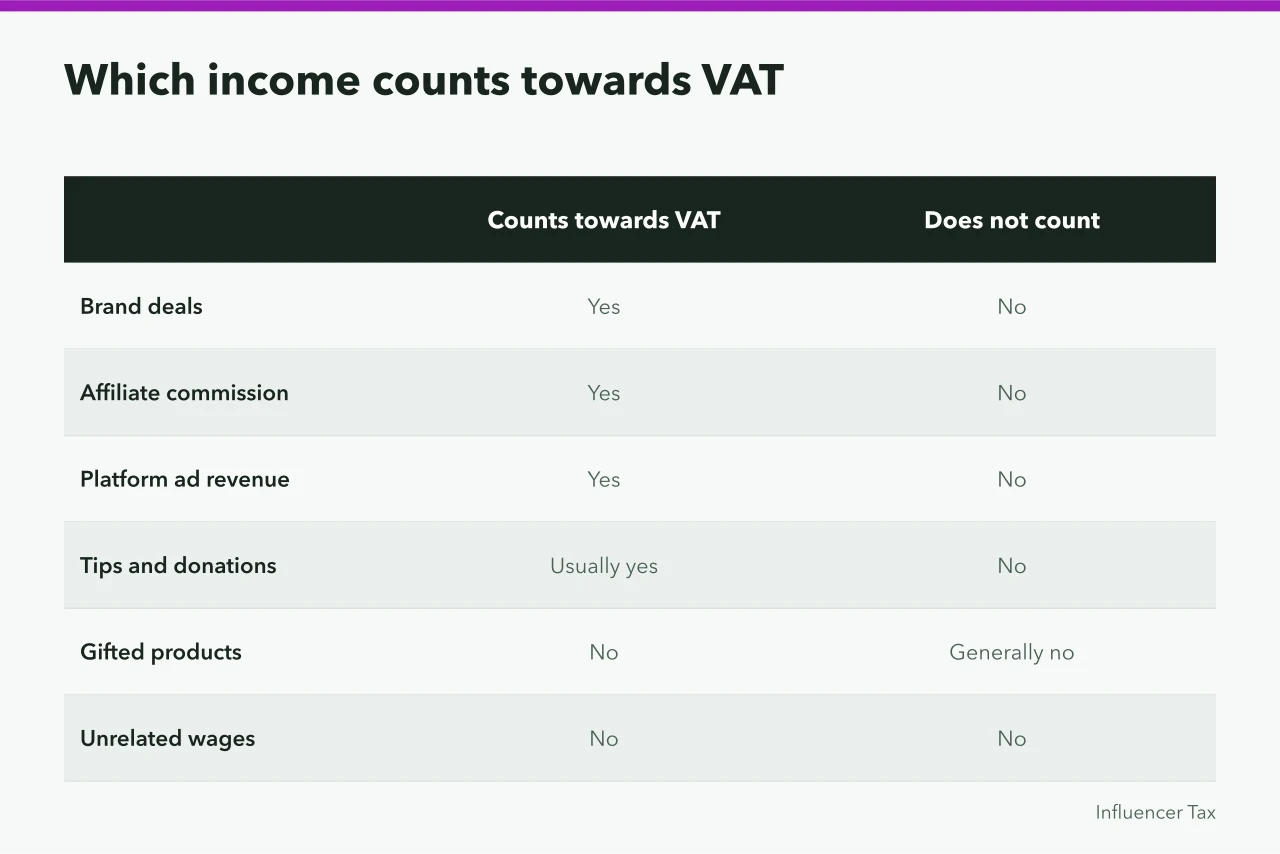
Turnover means the value of your taxable supplies before VAT is added. Savings interest, dividends and wages from an unrelated job do not count, and a strong quarter of brand deals can push a creator over the line even when ad revenue is modest.
Rolling 12-month VAT test
- Keep one record of taxable turnover
- At month end, add previous 12 months
- Over £90,000? Register within 30 days
- VAT start datefirst day of second month
- Next 30 days will exceed? Register now
Gifted items cause confusion. A free product you keep and post about is normally outside VAT because no money changes hands. Sell it later and that sale is a taxable supply.
Questions to settle before registering voluntarily
Voluntary registration is easier to defend when each of these has an answer:
- Which income streams are paid by VAT-registered businesses, and which by consumers or members
- Whether consumer and member income absorbs the 20% or carries a higher rate
- How much you expect to spend on cameras, software and studio costs
- Whether standard accounting or the Flat Rate Scheme fits that spending
- Which invoicing software will carry the VAT records and the digital returns
The price of waiting past the line
Waiting below the threshold is a free choice. Waiting past it is not. HMRC can charge a penalty and assess the VAT you should have charged. If clients will not pay the extra after the event, that VAT comes out of your margin.
Common questions
Do I need to register for VAT if I earn under £90,000?
Not usually. It becomes compulsory once turnover passes the threshold, or you expect it to within 30 days. You can register voluntarily, but you then charge VAT on everything you sell from your start date.
Can I register for VAT voluntarily as an influencer?
Yes, at any level of turnover. Voluntary registration lets you reclaim VAT on cameras, software and other business costs, and it means adding VAT to your invoices from your start date.
Do gifted products count towards the VAT threshold?
Generally no, because no payment is made. Where a gift forms part of a paid arrangement, or you later sell the item, the value can count towards your turnover.
What happens if I register late?
HMRC can charge a penalty and assess the VAT you should have charged. If clients will not pay the extra after the event, that VAT comes out of your margin.